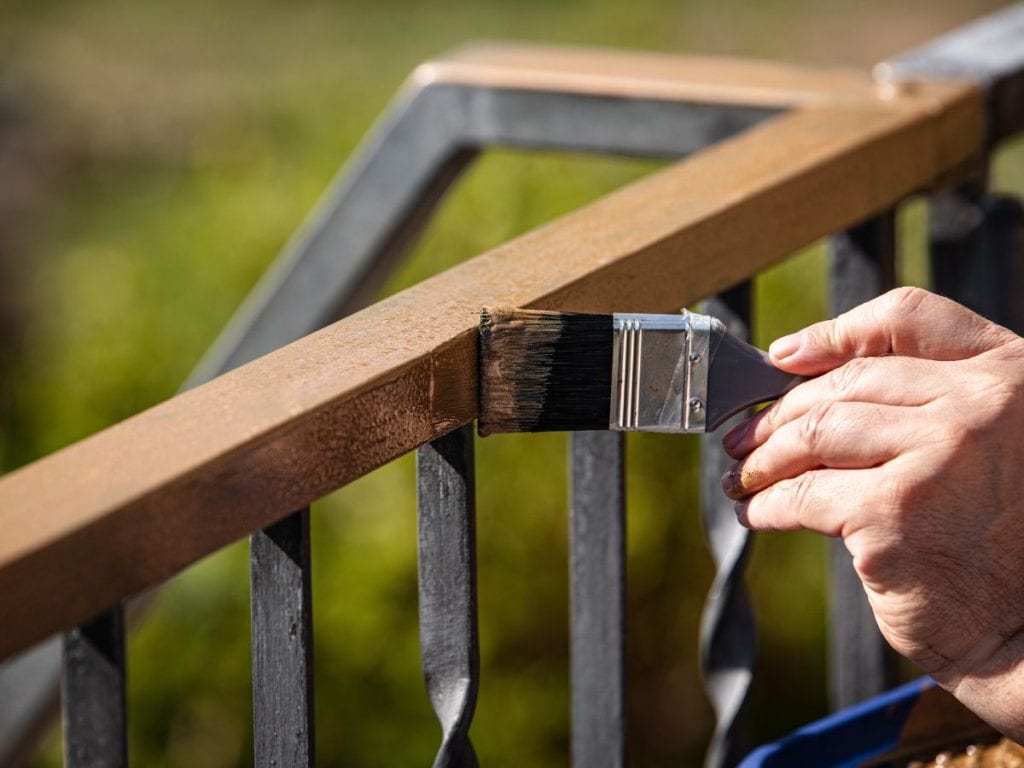
If you’re spray painting rusted metal, the biggest mistake isn’t the spray technique—it’s choosing the wrong prep system.
Rust is like a warning light. You can paint over it and get a decent-looking finish for a few weeks… but if the rust isn’t handled the right way, it usually comes back as:
- Orange bleed-through
- Bubbling under the paint
- Peeling around edges and welds
- Rough texture that keeps getting worse
So what’s the real fix: primer or a rust converter?
The short answer: they do different jobs, and the “best” one depends on how much rust you have, where the metal lives (indoors vs outdoors), and what kind of finish you want.
Below is a clear, homeowner-friendly breakdown to help you pick the right approach and avoid repainting soon.
First: What’s the Difference Between Primer and Rust Converter?
What a metal primer does
A primer is designed to help paint stick and create a stable base coat.
A good metal primer can:
-
Improve adhesion
-
Seal the surface
-
Reduce flash rust and staining
-
Help the topcoat level out better
But primer does not magically stop active rust if it’s thick, flaky, and spreading underneath.
What a rust converter does
A rust converter is a chemical treatment that reacts with rust, forming a more stable, paintable layer (often dark/black).
A good rust converter can:
- Stabilize light-to-moderate rust that you can’t completely remove
- Slow down ongoing corrosion
- Provide a better foundation for primer/topcoat (when used correctly)
But rust converter isn’t a finish coat, and it’s not a replacement for proper cleaning, de-greasing, and topcoating.
The Real Goal When Spray Painting Rusted Metal
To get a spray-painted finish that lasts, you need three things:
- Remove what must be removed (loose rust, flaky paint, grease)
- Stabilize what you can’t fully remove (tight rust in pits, seams, texture)
- Seal and protect with the right primer + topcoat system
If you skip any of those, rust usually returns.
Step-by-Step: How to Prep Metal Before You Spray Paint
This prep process works whether you choose primer, rust converter, or both.
Step 1: Check the rust level (so you choose correctly)
Use this simple, quick test:
Light rust (surface haze)
- Orange film
- No flaking
- Metal feels mostly smooth
Moderate rust (pitting and texture)
- Rough surface
- Rust in tiny pits
- Some edges may flake when scraped
Heavy rust (flaking and scaling)
- Thick, layered rust
- Chunks lift easily
- Metal may be weakened underneath
Your rust level determines the best product path.
Step 2: Remove loose material (this is non-negotiable)
Before any product goes on, remove:
- Loose rust
- Flaking paint
- Dust and debris
Tools that work well:
- Wire brush or wire wheel
- Sandpaper (coarse to medium)
- Scraper for peeling layers
Key rule: If it can come off with scraping, it will eventually come off under your paint. Remove it now, not later.
Step 3: Degrease the surface (so paint bonds actually)
Metal often has invisible oils from hands, old lubricants, or nearby exhaust/grime.
Wipe down thoroughly with a degreaser and clean rags.
If you don’t degrease:
- Paint can fisheye
- Primer can fail to bond
- Rust converter can react unevenly
Let it dry fully.
Step 4: Dry completely (especially outdoors)
Moisture trapped in pits or seams is a common reason rust returns quickly.
If you’re outdoors, avoid painting when the metal feels cool and damp (often in the morning or on foggy days).
When a Primer Is the Better Choice
Choose a primer-first approach if:
You can remove nearly all rust
If the rust is minimal and you can sand/brush it back close to clean metal, primer is usually enough.
You want the smoothest possible finish
Rust converters can leave texture depending on the product and the rust profile. If you’re aiming for a clean, smooth look on a railing or piece of furniture, removing rust and applying primer often gives the best appearance.
The metal is indoors or sheltered
If the item won’t be constantly exposed to rain/salt/humidity, a solid primer + topcoat system can hold up very well.
When a Rust Converter Is the Better Choice
Choose rust converter if:
Rust is in pits, seams, or tight areas you can’t fully reach
Some metal surfaces aren’t easy to clean down to bare metal (think: ornate railings, welded joints, textured metal, bolts, brackets).
Rust converter helps stabilize what you can’t fully remove.
You’re dealing with recurring rust
If something keeps rusting in the same spots, converter + proper topcoat can help slow that cycle.
The piece is outdoors and exposed
Outdoor metal is more likely to rust again—especially if it’s near sprinklers, ocean air, rain runoff, or condensation zones. A converter can add another layer of rust control when used correctly.
The Best “Pro” System for Most Rusted Metal: Converter + Primer + Topcoat
Here’s the most reliable approach for spray painting rusted metal when rust is moderate, and you can’t remove it all:
- Remove loose rust and flaking paint
- Degrease and dry
- Apply rust converter tothe remaining tight rust
- After it cures, apply a compatible metal primer
- Finish with spray paint topcoat (2+ thin coats)
Why this system works:
- The converter stabilizes the remaining rust
- Primer improves adhesion and seals
- Topcoat protects from moisture and UV
This layered approach usually lasts longer than “converter only” or “primer only” when rust is present.
Common Mistakes That Make Rust Come Back Fast
Mistake 1: Painting over loose rust
If rust flakes are still attached, paint will lift with them.
Mistake 2: Skipping degreasing
This causes adhesion issues and uneven finish—especially with spray paint.
Mistake 3: Using one heavy spray coat
Heavy coats lead to runs, trapped solvents, and weak film strength. Thin coats are stronger and look better.
Mistake 4: Not giving enough cure time
Rust converter and primer need a cure time to do their job. Rushing causes soft layers under the topcoat.
Mistake 5: Not sealing edges and seams
Rust loves corners, welds, and joints. Spend extra time on these areas with prep and coating coverage.
How Many Coats Should You Apply?
For most metal projects:
Rust converter
- Apply according to label instructions
- Ensure full coverage on rusted areas
- Let it cure fully before priming
Primer
- 1–2 thin coats, depending on coverage and product
- Focus on edges, pits, and seams
Spray paint topcoat
- 2–3 thin coats are typical
- Keep coats even and avoid overloading corners
Thin coats dry better and build a tougher film.
Spray Technique Tips for a Smoother Finish
If your finish usually looks bumpy or uneven, it’s often technique, not the paint.
Try these:
- Shake the can thoroughly
- Keep a consistent distance from the surface
- Start spraying off the piece, sweep across, then release the piece
- Overlap passes slightly
- Don’t “spot blast” one area too long (that causes runs)
A controlled, even spray beats trying to cover everything in one pass.
Choosing the Right Approach by Project Type
Metal railings and gates (outdoors)
- Often moderate rust in seams and welds
- Converter + primer + topcoat usually performs best
Metal patio furniture
- If rust is light and you can sand well, primer + topcoat can be enough
- If rust is pitted, the converter helps stabilize
Tools and garage metal pieces (indoors)
- Usually less exposure
- The primer-first approach often works well if rust is removed
Decorative metal with details
- Hard to sand every crevice
- A converter can be a lifesaver for tight areas
What If the Rust Is Heavy?
If the rust is thick and scaling, paint alone won’t be a miracle.
For heavy rust:
- Remove as much as physically possible
- Consider replacing severely weakened parts
- Use the converter only after the loose scale is removed
- Expect that extremely rusted metal may need more frequent maintenance
A paint job can improve appearance and slow corrosion, but it can’t restore metal that’s already structurally compromised.
Quick Decision Guide: Primer vs Rust Converter
If you want a simple way to choose:
- Use primer (only) when the rust is light, and you can sand most of it off.
- Use rust converter when rust is moderate and stuck in pits/seams.
- Use converter + primer + topcoat when you want the most reliable result on outdoor metal.
That’s the logic pros follow.
FAQs
1) Can I spray paint over rust without sanding?
You can, but it usually doesn’t last. Loose rust and flaky paint need removal first,t or the finish will peel.
2) Do I need primer after using a rust converter?
Often, yes. Primer improves adhesion and sealing before your topcoat. Many long-lasting systems use a converter, then primer,zighb then topcoat.
3) What causes rust to bleed through spray paint?
Usually, incomplete rust removal, poor sealing/priming, or moisture trapped under the coating. Rust will migrate through weak paint films.
4) Is rust converter better than primer?
Not exactly—rust converter stabilizes rust. Primer helps paint bond and seal. They solve different problems, and sometimes you need both.
5) How do I make spray paint last longer on metal outdoors?
Prep thoroughly, stabilize rust if needed, prime properly, apply multiple thin topcoats, and ensure full cure time before heavy exposure.

David Cooley, the esteemed owner of Cooley Brothers Painting, has established himself as a leading figure in the painting industry. With a rich history of delivering unparalleled service in Torrance, Manhattan Beach, Palos Verdes Estates, Redondo Beach, and Rolling Hills, his hands-on approach and dedication to quality have shaped Cooley Brothers Painting into a trusted name for exceptional painting services. With a focus on innovation, customer satisfaction, and community engagement, David’s leadership continues guiding his team toward new heights of excellence and reliability in every project.