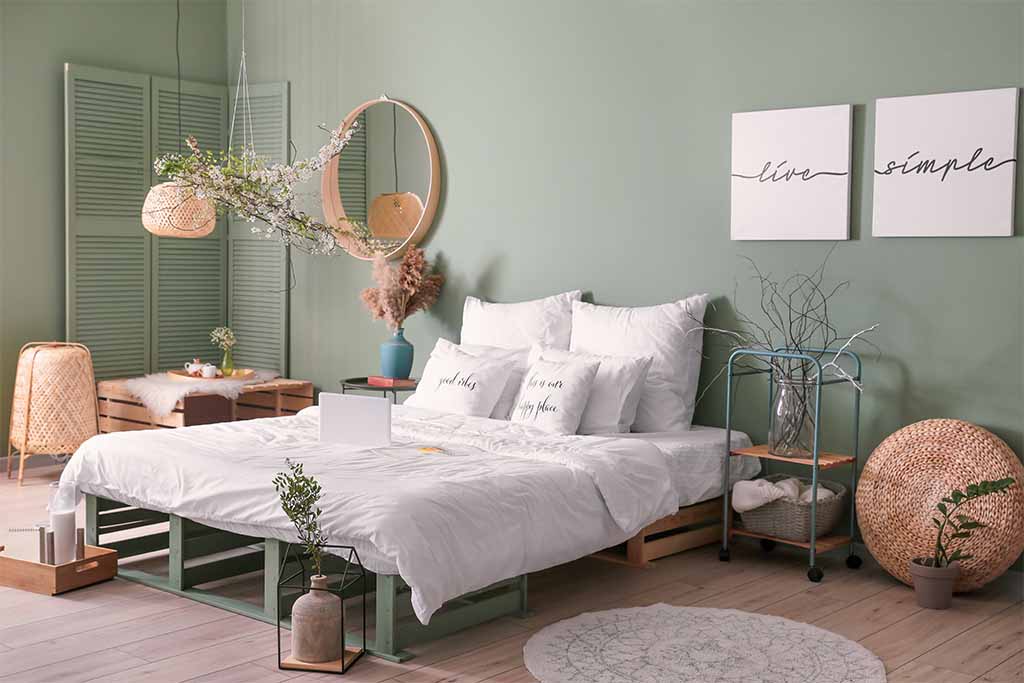
The ideal bedroom color is one that helps you rest. For most people that means soft, muted colors: gentle blues, sage and gray-greens, warm whites, greige, and soft lavender. These colors are easy on the eyes at night and in the morning, and they suit almost any bedding and furniture. If you want more personality, use a deeper color like navy, forest green, or terracotta on the wall behind the bed. Before you choose, look at how much natural light the room gets and test large samples in both daylight and lamplight.
This guide covers the best bedroom paint colors, how to choose one for your room’s light and size, colors for kids’ rooms and guest rooms, the right paint finish, and how to test colors before you paint. It reflects how our crews at Cooley Brothers Painting help homeowners choose bedroom colors across the South Bay.
Best bedroom paint colors
| Color | Feel | Best for |
|---|---|---|
| Soft blue and blue-gray | Calm, cool, restful | Primary bedrooms and south-facing rooms |
| Sage and gray-green | Natural, balanced | Any bedroom; pairs well with wood and plants |
| Warm white and ivory | Clean, bright, airy | Small rooms and rooms with little light |
| Greige and warm gray | Neutral, cozy | Rooms with mixed furniture and bedding |
| Soft lavender and dusty violet | Gentle, soothing | Primary bedrooms and girls’ rooms |
| Blush and dusty rose | Warm, soft | North-facing rooms that need warmth |
| Caramel and soft tan | Warm, enveloping | Rooms with wood floors and warm lighting |
| Navy, forest green, or terracotta | Dramatic, cocooning | An accent wall behind the bed |
Muted, slightly grayed versions of a color are more restful than bright, saturated ones. Bright yellow, orange, and red can feel energizing, so save them for small accents if you use them at all.
How to choose a bedroom color
- Decide on the mood. Most people want a calm, restful bedroom. If you want it to feel cozy, lean warm; if you want it to feel fresh and airy, lean cool.
- Check the light. North-facing rooms get cool, even light, so warm whites, blush, and greige keep them from feeling gray. South-facing rooms get warm light that balances cooler blues and greens. East- and west-facing rooms change through the day, so test colors in the morning and the evening.
- Start with what stays. Choose a color that works with your floors, headboard, bedding, and any wood furniture. Match the undertone (warm or cool) of the largest pieces.
- Consider the size. Light colors make a small bedroom feel larger. Deep colors make a large bedroom feel cozier.
- Test before you commit. Paint samples at least 2 feet square on two walls and look at them in daylight and under your bedside lamps.
Bedroom colors for better sleep
Soft blues, muted greens, and warm neutrals are the colors most often recommended for sleep. They’re low-contrast and calming, and they don’t reflect harsh light. Very bright whites can feel stark under morning sun, and saturated reds and oranges can feel stimulating. Whatever color you choose, warm bedside lighting and blackout curtains do as much for sleep as the wall color.
Accent walls and bold color
A deeper color on the wall behind the bed gives a bedroom a focal point without making the whole room dark. Navy, forest green, charcoal, plum, and terracotta all work well against a lighter neutral on the other walls. Our guides to accent walls and bold paint colors cover choosing and balancing a stronger color.
Kids’ rooms and guest rooms
- Kids’ rooms: soft greens, blues, and warm neutrals grow with the child better than bright primary colors. Add personality with one accent wall, furniture, or bedding, and choose a scrubbable finish.
- Nurseries: soft, muted colors such as sage, blush, pale blue, and warm white create a calm space. Choose a low-VOC or zero-VOC paint and paint well before the baby arrives.
- Guest rooms: warm whites, greige, and soft greens feel welcoming to everyone and work with any bedding.
Best paint finish for a bedroom
- Walls: eggshell or matte. Eggshell is easy to wipe clean; matte hides wall flaws and gives deeper colors a rich look.
- Kids’ rooms: eggshell or satin, or a scrubbable matte, so marks wash off.
- Trim and doors: satin or semi-gloss for durability.
- Ceiling: flat white, or the wall color lightened by half for a softer look.
- Low-VOC paint: a good choice for any room you’ll sleep in soon after painting.
Common bedroom color mistakes
- Choosing from a small paint chip instead of a large sample in the room.
- Ignoring how the color looks at night under lamps.
- Picking a color that fights the undertones of the floor or furniture.
- Using bright, saturated colors on every wall.
- Painting a dark color in a small, dim room without lightening the ceiling and trim.
Want help choosing and painting your bedroom?
Cooley Brothers Painting is a locally owned, family-run painting company in Torrance that handles interior painting throughout the South Bay, including bedrooms, nurseries, and guest rooms. We can help you test colors in your own light and finish the room quickly and cleanly. Request a free estimate or call the office at 310-378-4575.
Frequently asked questions
What is the ideal color for a bedroom?
Soft, muted colors such as gentle blue, sage, warm white, greige, and soft lavender are the most popular choices because they’re calming and easy to live with. The best color for your room also depends on its light and your furniture.
What bedroom color is best for sleep?
Soft blues, muted greens, and warm neutrals are the colors most often recommended for sleep. Avoid bright, saturated reds, oranges, and yellows on the main walls.
How do I choose a color for my bedroom?
Decide on the mood, check which way the room faces, choose a color that works with your floors and furniture, and test large samples in both daylight and lamplight before you buy.
Should a bedroom be light or dark?
Either can work. Light colors make small rooms feel bigger and brighter, while deep colors make a room feel cozy. A deep accent wall behind the bed with lighter walls elsewhere is a popular middle ground.
What paint finish is best for bedroom walls?
Eggshell or matte for walls, a scrubbable finish in kids’ rooms, and satin or semi-gloss for trim and doors.
What colors work for a small bedroom?
Warm whites, soft grays, pale blues, and light greens make a small room feel larger, especially with a white or lightened ceiling.

David Cooley, the esteemed owner of Cooley Brothers Painting, has established himself as a leading figure in the painting industry. With a rich history of delivering unparalleled service in Torrance, Manhattan Beach, Palos Verdes Estates, Redondo Beach, and Rolling Hills, his hands-on approach and dedication to quality have shaped Cooley Brothers Painting into a trusted name for exceptional painting services. With a focus on innovation, customer satisfaction, and community engagement, David’s leadership continues guiding his team toward new heights of excellence and reliability in every project.