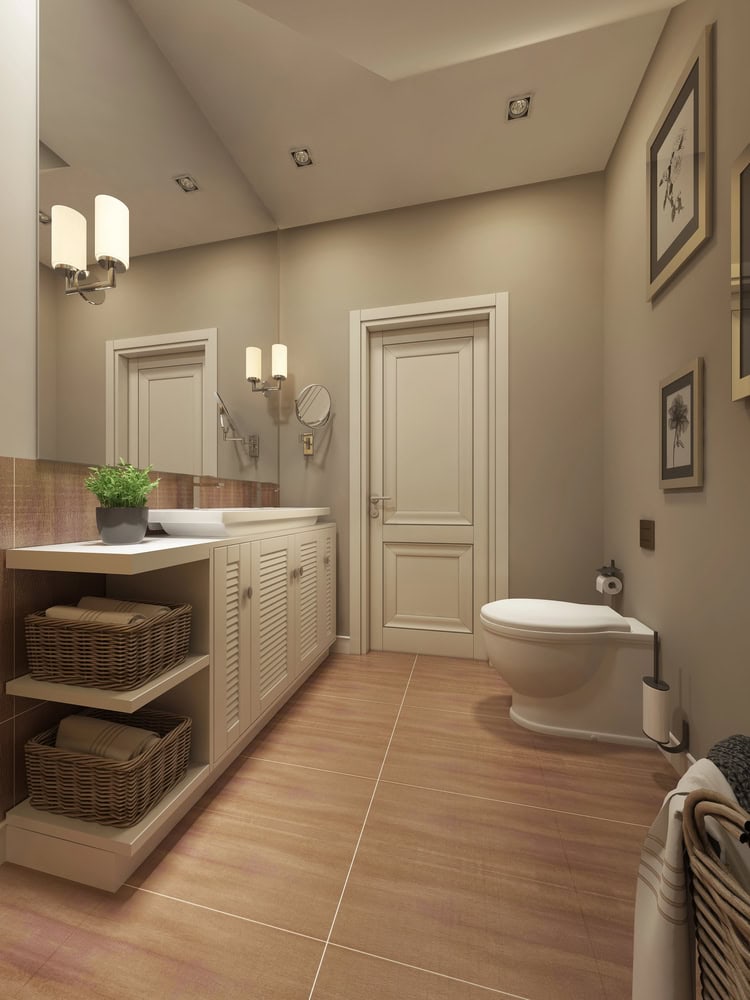
The best paint for a bathroom is a high-quality, 100% acrylic latex interior paint with a mildew-resistant formula, in a satin or semi-gloss finish. Many brands sell it as “kitchen and bath” paint. It stands up to steam and scrubbing, resists mildew, and cleans up with water. Use satin on the walls, semi-gloss on trim and doors, and a mildew-resistant ceiling paint overhead. Pair it with good prep and a working exhaust fan, and the paint will last for years instead of peeling within months.
This guide covers which paint type and sheen to use, primer, ceilings, powder rooms, prep, tools, and how long to wait before you shower. It reflects how our crews at Cooley Brothers Painting paint bathrooms across the South Bay, where coastal humidity makes good product choices even more important.
Quick answer: what paint to use where
| Surface | Paint | Sheen |
|---|---|---|
| Full bathroom walls (with a shower or tub) | Mildew-resistant 100% acrylic latex (“kitchen and bath”) | Satin (or semi-gloss for kids’ baths and steamy rooms) |
| Bathroom ceiling | Mildew-resistant ceiling or kitchen-and-bath paint | Flat or matte bath-rated, or satin |
| Trim, doors, and window casings | Acrylic or waterborne alkyd trim enamel | Semi-gloss |
| Powder room (no shower) | Quality acrylic latex | Eggshell or matte is fine |
| Vanity and cabinets | Cabinet-and-trim enamel over bonding primer | Satin or semi-gloss |
What type of paint should be used in a bathroom?
Choose a water-based, 100% acrylic latex paint. Acrylic resins stay flexible as the room heats and cools, hold their color, and resist moisture better than vinyl-acrylic or budget paints. Look for three things on the label:
- Mildew resistance. “Kitchen and bath” and “mildew-resistant” paints contain additives that inhibit mildew growth on the paint film.
- Scrubbability. You will wipe bathroom walls often, so the paint needs to survive cleaning without burnishing or washing off.
- Low VOC. Bathrooms are small and often poorly ventilated during painting, so lower-odor paint is more comfortable to work with.
Can you use regular wall paint in a bathroom?
In a powder room or half bath with no shower, yes; a good-quality interior acrylic works fine. In a full bathroom, regular flat or matte wall paint is more likely to absorb moisture, show water streaks, grow mildew, and peel. Spend the extra on a kitchen-and-bath or mildew-resistant formula.
Can you use water-based paint in a bathroom?
Yes. Water-based acrylic latex is the standard choice for bathroom walls and ceilings today. Oil-based (alkyd) wall paint is rarely used anymore; it yellows, cracks as it ages, and has strong fumes. If your existing walls or trim are oil-based, scuff-sand and use a bonding primer before applying latex.
Is acrylic paint good for bathrooms?
Yes. 100% acrylic interior paint is the best general-purpose bathroom wall paint because it is flexible, moisture-resistant, and washable. Craft acrylics are a different product and are not meant for walls.
Which sheen is best for a bathroom?
- Satin: the best all-around choice for bathroom walls. It sheds moisture, wipes clean, and hides minor wall flaws better than semi-gloss.
- Semi-gloss: the most moisture- and scrub-resistant. Best for trim, doors, and steamy kids’ or shared bathrooms. It does show dents and patches more.
- Eggshell: fine for powder rooms and well-ventilated bathrooms that rarely get steamy.
- Flat and matte: avoid on full-bath walls unless the product is specifically rated for bathrooms. Some specialty matte bath paints are designed for humidity and work well.
Bathroom ceilings
Steam rises, so the ceiling takes the most moisture of any surface in a bathroom. Use a mildew-resistant ceiling paint or a kitchen-and-bath paint in a flat, matte, or satin finish. If the ceiling already has mildew spots or water stains, clean them, let the surface dry, and spot-prime with a stain-blocking primer first. Our guides to painting a ceiling without getting paint on the walls and covering ceiling water stains cover the technique.
Do you need primer in a bathroom?
- New or patched drywall: yes, use a drywall primer so the paint dries evenly.
- Mildew stains, water stains, or smoke stains: yes, use a stain-blocking primer after cleaning.
- Glossy or oil-based surfaces: yes, scuff-sand and use a bonding primer.
- Sound, clean latex paint of a similar color: usually no; two coats of quality paint are enough.
How to prep and paint a bathroom
- Fix the moisture source. Repair leaks and make sure the exhaust fan works and vents outside. Paint will not fix a ventilation problem.
- Remove what you can. Take off towel bars, mirrors, the toilet tank lid, outlet covers, and the light fixture canopy if you can do it safely, and mask the rest.
- Kill and clean mildew. Treat mildew spots with a mildew remover or a diluted bleach solution according to the product label, rinse, and let the walls dry completely. Never mix bleach with ammonia-based cleaners.
- Degrease. Wash walls with a mild detergent or TSP substitute to remove soap film and hairspray residue, then rinse.
- Repair and sand. Scrape loose paint, fill holes and cracks, sand smooth, and dust off.
- Caulk. Replace cracked caulk around the tub, shower, and trim with paintable caulk where it will be painted, or 100% silicone at wet joints that will not be painted.
- Prime where needed, then cut in and roll two coats, letting each dry fully.
Tools that help in small bathrooms
- A 2″ angled sash brush for tight cut-ins around the vanity, toilet, and tile.
- A 4″–6″ mini roller for the narrow wall behind the toilet and over the vanity.
- A 9″ roller with a 3/8″ nap for open walls, plus a short extension pole for the ceiling.
- Painter’s tape, plastic sheeting for the tub and vanity, and drop cloths.
- A small fan or the exhaust fan running to keep air moving while the paint dries.
How long to wait before showering after painting
Keep steam out of the room for at least 24 hours after the final coat, and longer if you can. Paint is dry to the touch within hours but takes days to weeks to fully cure. Some kitchen-and-bath paints list a shorter moisture-ready time on the label, so check your product. When you start showering again, run the exhaust fan during and for 20–30 minutes after, and avoid scrubbing the walls for the first couple of weeks.
Powder rooms and half baths
Without a shower, a powder room behaves more like a hallway than a bathroom, so you have more freedom. Eggshell and matte finishes, darker colors, and even wallpaper all work well. Powder rooms are a great place for a dramatic color, since guests see them briefly and the small size makes the effect feel intentional.
Bathroom paint colors
Soft whites, warm grays, greige, and pale blue-greens are the most popular bathroom wall colors because they feel clean and work with most tile. Muted greens and blues suit coastal homes, and deeper colors such as navy or forest green look rich in powder rooms or on a single wall behind the vanity. Check samples under your vanity lighting, since bathroom bulbs change colors more than daylight.
Common bathroom painting mistakes
- Painting over mildew without killing it first.
- Using flat wall paint in a steamy full bath.
- Skipping the exhaust fan or painting a room that has no ventilation.
- Showering too soon, before the paint has had time to harden.
- Painting over soap film or hairspray residue, which causes peeling.
Painting the vanity too?
Bathroom cabinets need a different product than the walls: a cabinet-and-trim enamel over a bonding primer. Our guide on how to paint bathroom cabinets walks through it step by step.
Want a professional bathroom paint job?
Cooley Brothers Painting is a locally owned, family-run painting company in Torrance that handles interior painting throughout the South Bay, including bathrooms, ceilings, and vanities. Request a free quote or call the office at 310-378-4575.
Frequently asked questions
What type of paint do you use in a bathroom?
A mildew-resistant, 100% acrylic latex interior paint, often labeled “kitchen and bath,” in a satin or semi-gloss finish for full bathrooms.
What is the best finish for bathroom walls?
Satin for most bathrooms. Use semi-gloss in very steamy or heavily used bathrooms and on trim and doors. Eggshell or matte is fine in powder rooms.
Do I need special paint for a bathroom ceiling?
Yes, for a full bathroom. Use a mildew-resistant ceiling paint or a kitchen-and-bath paint, because the ceiling collects the most steam.
Can I paint over mold in a bathroom?
No. Clean and kill the mildew first, let the surface dry, and prime with a stain-blocking primer. Painting over live mildew lets it grow back through the new paint. Large or recurring mold growth points to a moisture problem that needs fixing first.
How long should paint dry before a shower?
Wait at least 24 hours, longer if possible, and check the label for your paint’s moisture-ready time. Run the exhaust fan whenever you shower for the first few weeks.
Is semi-gloss or satin better for a bathroom?
Satin is the better all-around choice for walls because it resists moisture and hides flaws. Semi-gloss is more scrubbable and best for trim, doors, and very steamy rooms.

David Cooley, the esteemed owner of Cooley Brothers Painting, has established himself as a leading figure in the painting industry. With a rich history of delivering unparalleled service in Torrance, Manhattan Beach, Palos Verdes Estates, Redondo Beach, and Rolling Hills, his hands-on approach and dedication to quality have shaped Cooley Brothers Painting into a trusted name for exceptional painting services. With a focus on innovation, customer satisfaction, and community engagement, David’s leadership continues guiding his team toward new heights of excellence and reliability in every project.